ॐHistory Baba Baidyanath Dham Jyotirlinga
ॐThe Rich History of Baba Baidyanath Temple
" Origins and Early Construction "
The Baba Baidyanath Temple, also known as Vaidyanath or Baidhyanath or Baijnath or Vaijnath Dham, has a millennia-long History. Situated in Deoghar, Jharkhand, India, this temple is one of the twelve Jyotirlingas, the most revered shrines dedicated to Lord Shiva.
Historical records suggest the temple's original construction in the 8th century by Puran Mal, an ancestor of the Nagavanshi dynasty. Over the centuries, the temple has seen numerous renovations and expansions, reflecting various architectural styles and cultural influences. The current structure, attributed to Raja Man Singh in the 16th century, showcases a blend of Nagara and Dravidian styles.
Architectural Splendor
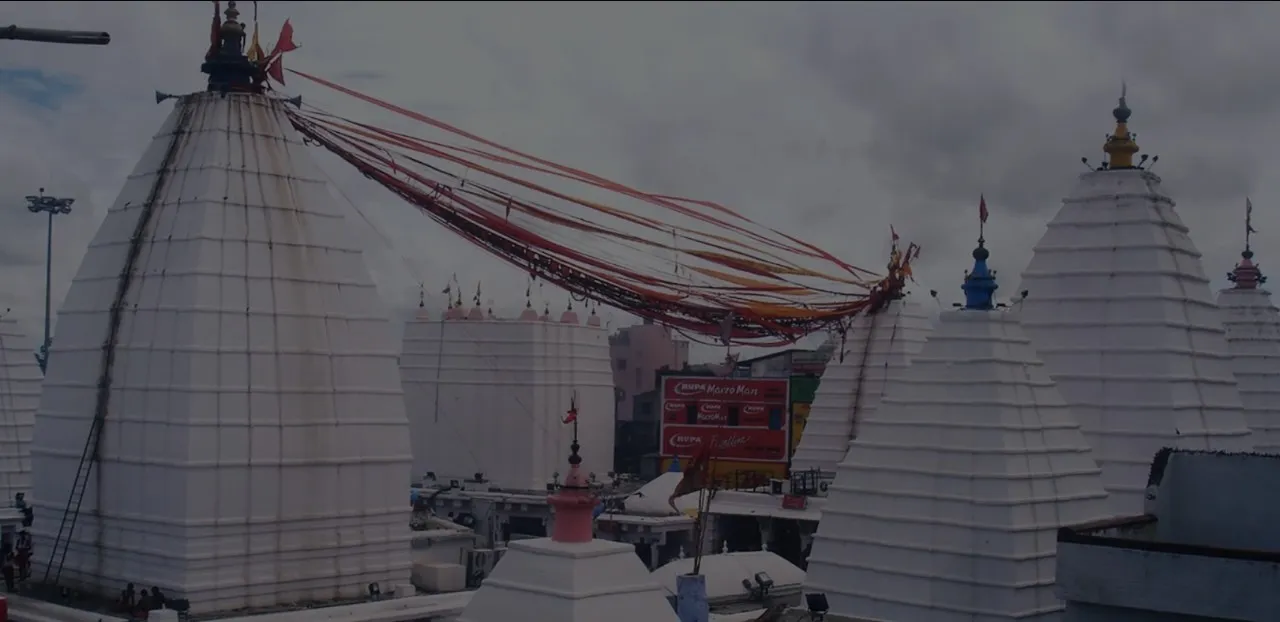
The Baba Baidyanath Temple complex covers a vast area and is renowned for its towering spire, intricate carvings, and the sacred tank known as Shrawani Mela Kund. The main temple, facing east, features a plain stone structure with a pyramidal tower rising to 72 feet. The tower is adorned with three ascending gold vessels, compactly set and donated by Raja Puran Singh of Giddhaur. These vessels, along with a rare Punchsula (five knives in a trident shape) and an eight-petaled lotus jewel called Chandrakanta Mani, contribute to the temple's unique architectural elements.
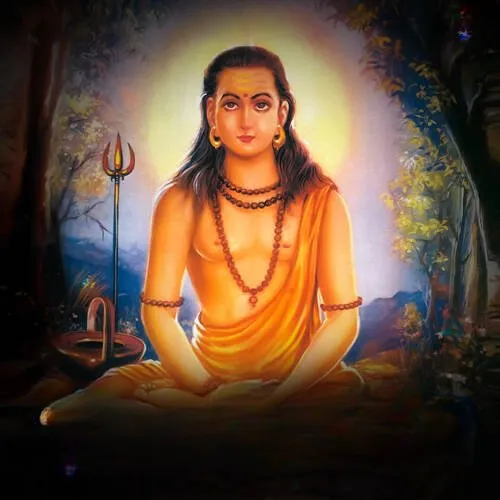
The complex houses 21 other temples dedicated to various deities, including Parvati, Ganesha, Brahma, Kalabhairav, Hanuman, Saraswati, Surya, Ram-Lakshman-Janaki, Ganga, Kali, Annapurna, and Lakshmi-Narayan. The Maa Parvati temple, connected to the Shiva temple with red sacred threads, further emphasizes the site's significance in Hindu worship.
Mythological Significance
The mythology surrounding the Baba Baidyanath Temple is deeply embedded in Hindu scriptures, particularly the Puranas. One prominent legend involves the demon king Ravana, a central figure in the epic Ramayana.
Ravana, an ardent devotee of Lord Shiva, sought to bring the powerful Jyotirlinga from Mount Kailash to Lanka. During his journey, Lord Vishnu, also known as Baiju Gadariya, intervened and caused a piece of the Linga to fall in Deoghar. This is where the Baba Baidyanath Temple now stands. People believe this piece of the Linga became the main part of the temple.
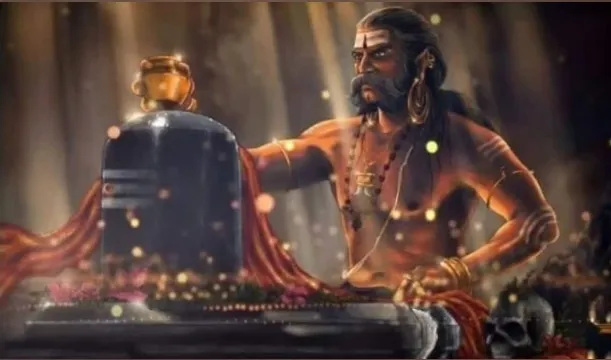
Another legend explains the name "Baidyanath," meaning 'Lord of Physicians' or 'The King of Remedies.' According to this tale, Lord Shiva assumed the role of a healer to cure Ravana, who was injured during his devotion. Impressed by Shiva's healing powers, Ravana requested him to reside in the form of the Linga at Deoghar.
Legends and Cultural Beliefs
Apart from the Ravana legend, several other intriguing legends are linked to the Baba Baidyanath Temple. One such legend revolves around the jewel Chandrakant Mani, believed to have fallen from Lord Shiva’s forehead, radiating divine energy from the temple's sanctum. Devotees hold that this jewel is still present within the sanctum, contributing to the temple's mystical aura.
The concept of Jyotirlingas holds significant spiritual importance in Hinduism. Jyotirlingas are sacred shrines of Lord Shiva, symbolizing his infinite nature as a column or pillar of light. There are twelve Jyotirlingas in India, each revered as a major pilgrimage site.
Historical Significance
The Baba Baidyanath Temple has played a crucial role in the spiritual and cultural history of the region. Its significance is highlighted by the contributions of various rulers and dynasties throughout History. For instance, during the 8th century, under the rule of the last Gupta emperor Adityasena Gupta, the temple gained prominence. Later, the Mughal emperor Akbar’s brother-in-law built a pond at Deoghar, known as Mansarovar, further enhancing the site's spiritual significance.
Despite the political and religious changes during the Muslim rule in India, the Baba Baidyanath Temple maintained its importance, attributed to its deep-rooted association with Hindu beliefs and continuous patronage from various rulers and devotees.
The Shakti Peetha
The Baba Baidyanath Temple is unique as it serves as both a Jyotirlinga and a Shakti Peetha. Shakti Peethas are sacred sites dedicated to the goddess Shakti, associated with different parts of the goddess Sati’s body. According to legend, Sati's heart fell at Deoghar, making it a Shakti Peetha. This dual significance enhances the temple's spiritual stature. The temple also pays homage to Maa Parvati, reflecting the integrated worship of Shiva and Shakti.
The Shrawan Mela
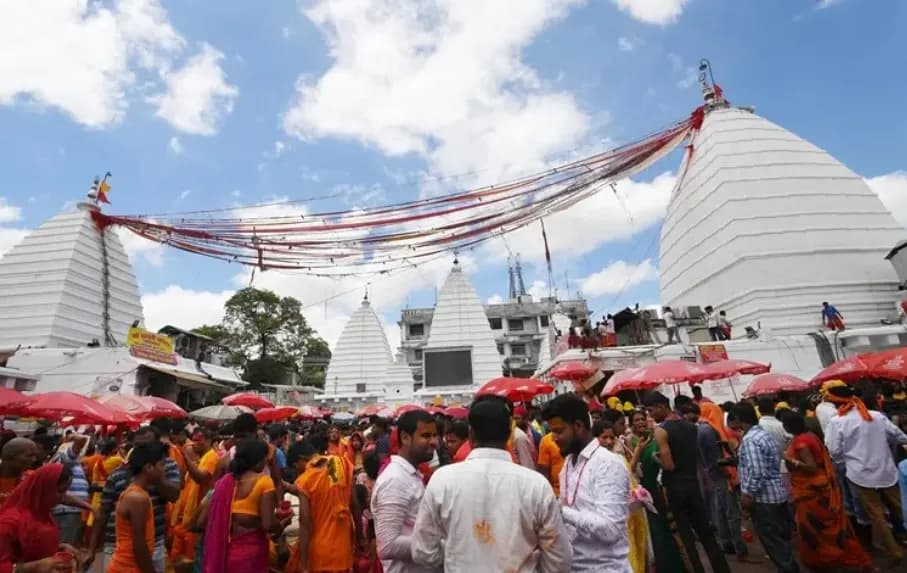
The Shrawan Mela, held annually during the month of Shravan (July-August), is one of the most significant events associated with the Baba Baidyanath Temple. This month-long festival attracts millions of devotees from across India, who come to offer holy water from the Ganges at Sultanganj to Lord Shiva. The devotees, dressed in saffron-dyed clothes, form a continuous line stretching over 108 kilometers from Sultanganj to Deoghar, making it one of the largest religious gatherings in Asia.
Modern-Day Relevance
In contemporary times, the Baba Baidyanath Temple continues to be a vital center of worship and spirituality. The temple's management and upkeep are overseen by the state government, ensuring its historical and cultural legacy is preserved. Despite modern advancements, the temple retains its ancient charm and spiritual ambiance. Devotees from all walks of life visit the temple seeking blessings, healing, and spiritual solace.
Architectural and Cultural Heritage
The architectural and cultural heritage of the Baba Baidyanath Temple is a testament to its historical significance. The temple's intricate carvings, sacred tank, and various shrines reflect the rich tapestry of Indian art and architecture. The blend of Nagara and Dravidian styles showcases the confluence of different cultural influences over the centuries.
Conclusion
The history of the Baba Baidyanath Temple is a fascinating journey through time, encompassing ancient legends, historical developments, and enduring spiritual traditions. From its early construction in the 8th century by Puran Mal to its renovation by Raja Man Singh in the 16th century, the temple has witnessed numerous changes while retaining its core significance as a major center of worship.
The legends associated with the temple, particularly those involving Ravana and the Jyotirlinga, add to its mystical allure. As both a Jyotirlinga and a Shakti Peetha, the temple holds a unique place in Hindu religious practice. The annual Shrawan Mela, attracting millions of devotees, underscores the temple's continued relevance and importance in contemporary times.